Who were Matthew, Mark, Luke, & John? (pt. 4): John
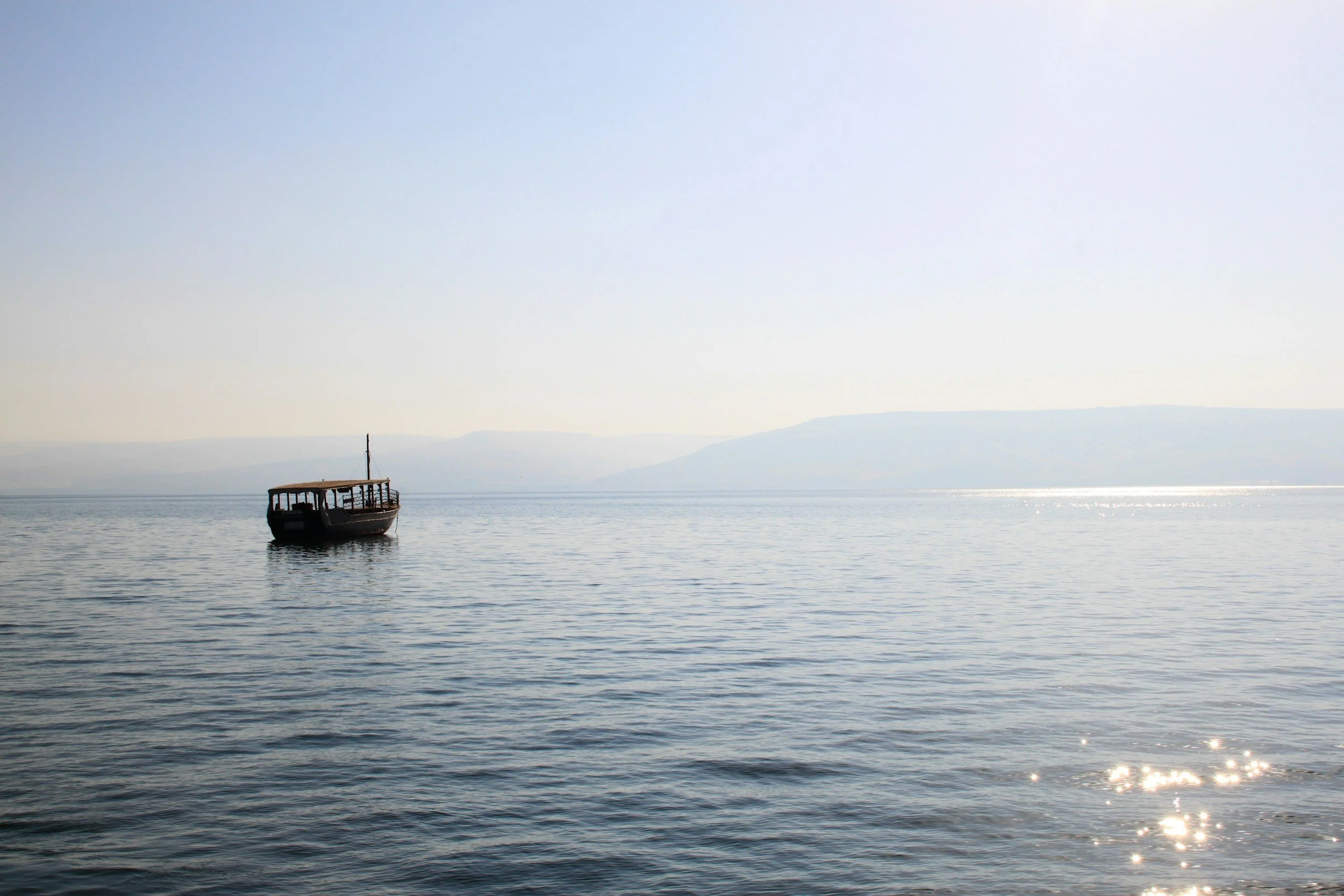
Photo by Sylvain Brison
This is the fourth and final of a four-part series on the four Gospel authors. Yesterday I looked at Luke. Today, I look at John.
The Gospels are the first four books of the New Testament of the Bible, and they tell the story of Jesus' life and teachings. The names of the Gospels are Matthew, Mark, Luke, and John.
So, who was John?
Similar to Matthew, John was one of the twelve closest followers (or disciples) who spent intimate time with Jesus. Actually, of those twelve, he was part of what appears to be an inner circle of three who sometimes did things with Jesus on their own, without the others. This group included Peter and John's brother, James.
Actually, James and John were colleagues with Peter and his brother Andrew before Jesus called all four of them to follow him. Peter, Andrew, James, and John were fishermen who worked in the Sea of Galilee, which is actually a large freshwater lake. We also know that James and John were the sons of Zebedee, a fisherman.
In addition to John's gospel, he also wrote three letters (often called epistles) in the New Testament, referred to as 1, 2, and 3 John. And he is the author of the final book in the New Testament and, therefore, the entire Bible, called Revelation, which is an account of prophetic visions he had while a prisoner late in life on a Greek island called Patmos. By the way, there is a lot of debate over whether the same John wrote these letters and the book of Revelation, but my own assumption aligns with traditional Christian belief that we are talking about the same person.
Also, of the four Gospels, John's is the most unique. For example, unlike the other three, John's gospel does not contain any parables, which are short stories Jesus used to teach profound truths about God. There are also stories in John's gospel that don't appear in the other three, and stories in the other three gospels that don't appear in John. However, there is a lot of overlap in the general trajectory of Jesus' public life, especially around his death and resurrection.
There are two unique emphases in the gospel that I want to highlight. These two themes are the bookends of this gospel. One is emphasized at the beginning and the other at the end: the Word of God and belief.
The Word of God
John writes a sort of prologue, the very beginning of his gospel, that connects the story of Jesus to the story of creation in the very first book of the Old Testament, and therefore the first book of the Bible called Genesis. John explains that Jesus was there at creation and that he is the Word of God. The Greek word for "Word" in the original text is logos, a Greek concept associated with philosophical wisdom. Basically, John is saying something like this: Jesus has always existed, even before he became a human person. In fact, he is God. He is a unique aspect of God, his spoken wisdom and knowledge. Jesus was that Word of God that spoke all things into existence and still holds them together. And then that Word became a man, and we call him Jesus now.
That you may believe
Then at the very end of his gospel, John writes:
Now Jesus did many other signs in the presence of the disciples, which are not written in this book; but these are written so that you may believe that Jesus is the Christ, the Son of God, and that by believing you may have life in his name. … Now there are also many other things that Jesus did. Were every one of them to be written, I suppose that the world itself could not contain the books that would be written.
So, John tells us the purpose of writing his gospel: That we might believe in Jesus (the Word of God). As a matter of fact, the topic of belief comes up throughout the whole gospel in Jesus' teaching, and he emphasizes his exclusivity—that he is the only one we should believe in. He says things like:
Let not your hearts be troubled. Believe in God; believe also in me. … I am the way, and the truth, and the life. No one comes to the Father except through me. If you had known me, you would have known my Father also.
There is undoubtedly more to say about John, too much for a blog post. Of all four gospel authors, he is the one I feel I could say the most about. But I want to keep this to a readable length. So I want to bring this post in for a landing and say one final thing—my own reflection.
Be like Nicodemus
I appreciate that John's is the fourth gospel in the order they are now bound for one main reason. I recommend that anyone read all four gospels at least once to get to know Jesus, and that they consider doing so in order. If we do this, then John (and Jesus in John) presses us to reckon with who Jesus is and what we make of him.
There is a story in John's third chapter of a man named Nicodemus, who can serve as a type of stand-in for all of us who read the gospel. Nicodemus faced this reckoning with who Jesus is and what he made of him. By the end of chapter 3, we are unsure whether Nicodemus was ready to hear what Jesus said and whether he would forsake all to follow Jesus by being "born again," as Jesus explains it to him.
But gladly, we encounter Nicodemus in chapter 7, when he defends Jesus before religious leaders like himself. Still, we are unsure about his stance toward Jesus at this point. He sticks out his neck a little, but it is not yet clear that he is believing the way John wants us to. But then, after Jesus is killed, we learn in chapter 19 that Nicodemus is there when some people bury his body. I have to think that at this point, Nicodemus believes that Jesus is who he said he was, is who John said he was.
The question is, will we? Will you? Where are you with Jesus? What do you make of him? Perhaps like Nicodemus, you need some more time to think on these things. I get that. I was there once. But I hope, like Nicodemus, this won't be the last we hear from you. That you will one day stick your neck out for him.
If you appreciate this post/series and think someone else might find it helpful, please share it. You can also subscribe to this blog by clicking the button either above or below this post.