Navigating the Bible
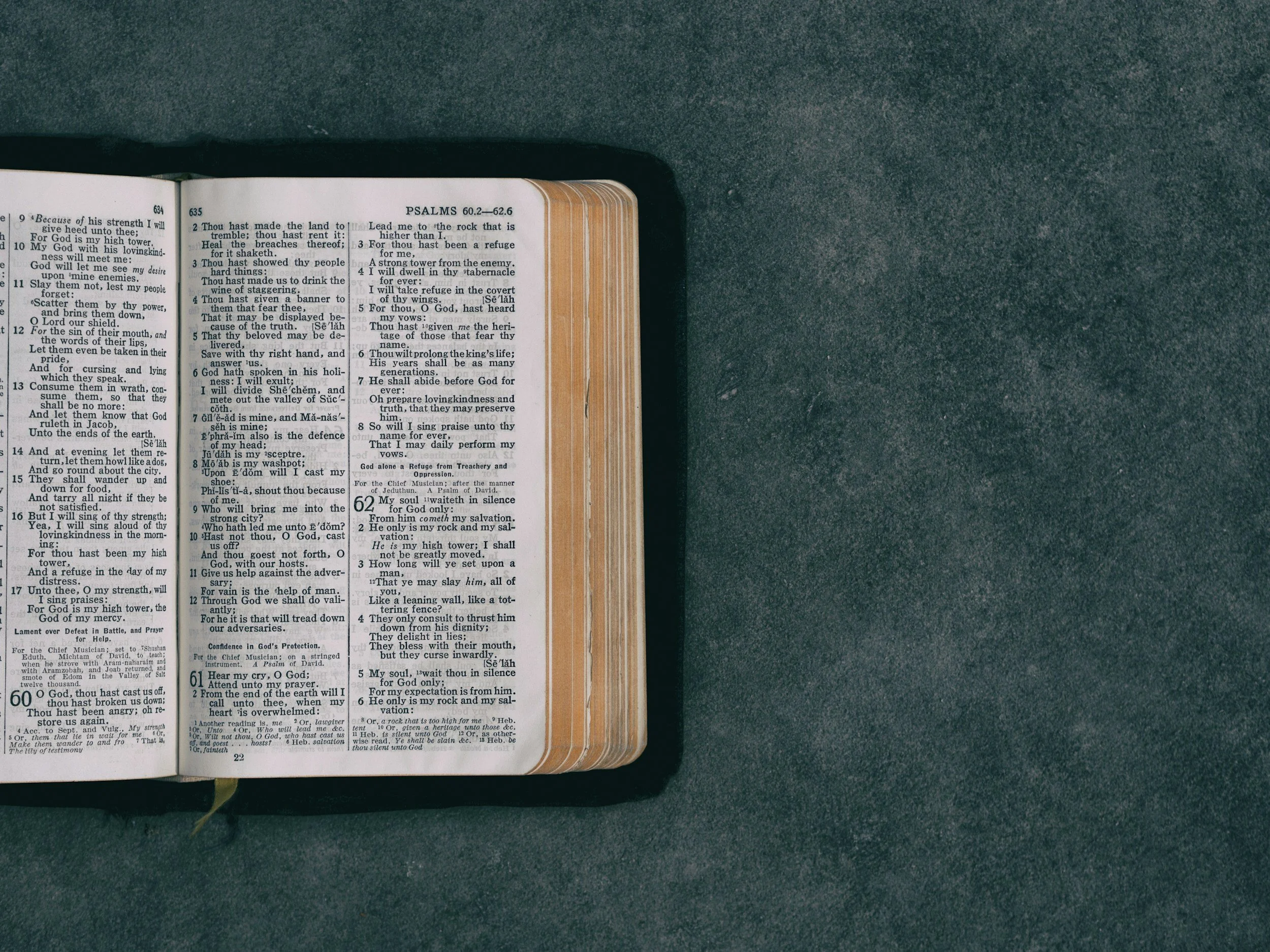
Photo by Aaron Burden
If you're unfamiliar with the Bible, it can be a daunting book to try to start reading. I know! I got started about 25 years ago, and I attempted to read it from front to back, cover to cover, like a regular book.
But that's not always the best way to approach the Bible. I eventually got bogged down by taking that approach. So I'll tell you my recommended starting points, but first, let me explain some helpful things for navigating the Bible.
The Bible, although bound like a book, isn't one book but a collection of smaller books, sort of like a small library. It contains 66 books. You can find these listed in a table of contents toward the front or in a book list if you read online.
It is divided into two parts: the Old Testament and the New Testament.
The Old Testament makes up the first 3/4 of the Bible. It is primarily the story of God’s relationship with one man's family. His name is Abraham, and his family becomes a nation called Israel, named for his grandson. The Old Testament also includes the narrative about creation and some brief history toward the beginning of the time before Abraham.
The New Testament is the final 1/4 of the Bible. It starts with the life and teachings of Jesus, then a history of the earliest church, then multiple letters to early churches primarily written by a leader named Paul, and then a book called Revelation that is a book of visions, including visions about the future when things come to an end and Jesus returns to earth.
I suggest that rather than starting with Genesis, which is the first book in the Old Testament, you begin with the first four books of the New Testament, which are called the Gospels and are written by Matthew, Mark, Luke, and John.
If you read through the Gospels, I invite you to consider what you make of Jesus and how you will respond to him. If you are not ready to follow him, I suggest you keep reading these four books until you are ready. Of course, you can read other books, especially to help you understand the Gospels, which often reference the Old Testament, but I suggest you focus on the four Gospels for now.
From there, if you're ready to follow Jesus, consider reading Acts next, which gives the clearest picture of what it means to follow Jesus and be the church.
PS If you’re not a big reader, everything in the Bible is available on audio as well.