O little town of Bethlehem
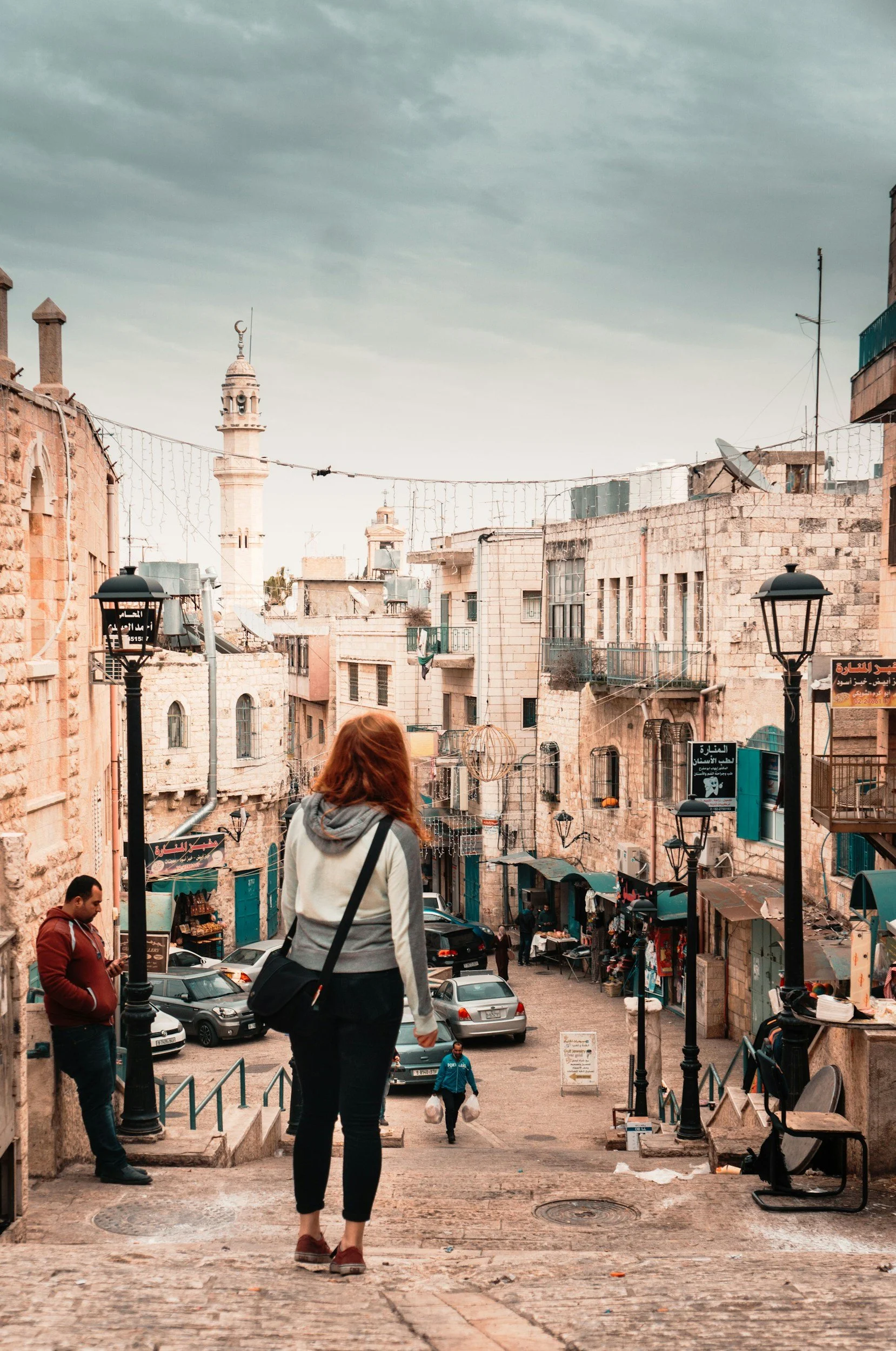
Photo by Jonas Brief
Yesterday, I started sharing some insights into the origins of Christmas. Today, I want to talk about the importance of the city of Bethlehem, which is still a city today in the West Bank, just outside of Jerusalem. It's also where Jesus was born.
The story goes like this. The regions of Judea and Galilee, which make up much of present-day Israel, were under Roman rule around 2,000 years ago. The Emperor of Rome, Caesar Augustus, ordered a census of all Roman territories. According to Luke's Gospel in the New Testament of the Bible, some people apparently had to return to their ancestral homelands. Although Jesus had only a biological human mother, she was engaged to be married to a man named Joseph, whose ancestry was from Bethlehem. So they returned to Bethlehem for the census because of his lineage.
At the time, they were living in Nazareth in the region of Galilee, which would have been a long-ish journey to Bethlehem. Mary was very pregnant with Jesus at the time, but they had to go. After they arrived, Jesus was born in Bethlehem.
There is great importance here in Jesus being born in Bethlehem, which was in an area known as Ephratha. This is the area that King David was originally from, hundreds of years before Jesus' birth. David is the most well-known and beloved king of Israel from the Old Testament of the Bible. God also promised David:
And your house and your kingdom shall be made sure forever before me. Your throne shall be established forever.
In other words, the dynasty of David's heirs will last eternally. That was fulfilled in Jesus, who was considered a direct descendant of David through Mary's husband, Joseph (and possibly Mary as well).
For this reason, the prophet Micah in the Old Testament gives this prophecy, which again is fulfilled by Jesus being born in Bethlehem:
But you, O Bethlehem Ephrathah, who are too little to be among the clans of Judah, from you shall come forth for me one who is to be ruler in Israel, whose coming forth is from of old, from ancient days.
For this reason, when some wise men from the east come to visit the newly promised king, they mistakenly go to Jerusalem and speak to Herod, the Roman-appointed king of Judea. He is threatened by their request, so he deceitfully inquires of the Jewish religious leaders where this promised king might be. We learn the following, which, in part, cites the Micah passage above:
Now after Jesus was born in Bethlehem of Judea in the days of Herod the king, behold, wise men from the east came to Jerusalem, saying, "Where is he who has been born king of the Jews? For we saw his star when it rose and have come to worship him." When Herod the king heard this, he was troubled, and all Jerusalem with him; and assembling all the chief priests and scribes of the people, he inquired of them where the Christ was to be born. They told him, "In Bethlehem of Judea, for so it is written by the prophet:
"'And you, O Bethlehem, in the land of Judah,
are by no means least among the rulers of Judah;
for from you shall come a ruler
who will shepherd my people Israel.'"
Then Herod summoned the wise men secretly and ascertained from them what time the star had appeared. And he sent them to Bethlehem, saying, "Go and search diligently for the child, and when you have found him, bring me word, that I too may come and worship him." After listening to the king, they went on their way. And behold, the star that they had seen when it rose went before them until it came to rest over the place where the child was. When they saw the star, they rejoiced exceedingly with great joy.
So, for all these reasons, Jesus had to be born in Bethlehem to fulfill these prophecies. These thoughts about Bethlehem were so crucial regarding the promised Messiah that later in Jesus' life, there was a mistaken dispute about him, since he was known to be from Nazareth in Galilee, which is indeed the town where he grew up. However, it appears some people did not know that he was born in Bethlehem:
When they heard these words, some of the people said, "This really is the Prophet." Others said, "This is the Christ." But some said, "Is the Christ to come from Galilee? Has not the Scripture said that the Christ comes from the offspring of David, and comes from Bethlehem, the village where David was?" So there was a division among the people over him.
Of course, we know from the full story that Jesus fulfills these promises in his birth in Bethlehem.
I leave you to ponder these poetic words from the well-known Christmas song/carol, "O Little Town of Bethlehem," now that you have more background information on the connection between Jesus and his birth in Bethlehem:
O little town of Bethlehem,
how still we see thee lie!
Above thy deep and dreamless sleep
the silent stars go by.
Yet in thy dark streets shineth
the everlasting light;
the hopes and fears of all the years
are met in thee tonight.For Christ is born of Mary;
and, gathered all above,
while mortals sleep, the angels keep
their watch of wond'ring love.
O morning stars, together
proclaim the holy birth,
and praises sing to God the King,
and peace to men on earth.